
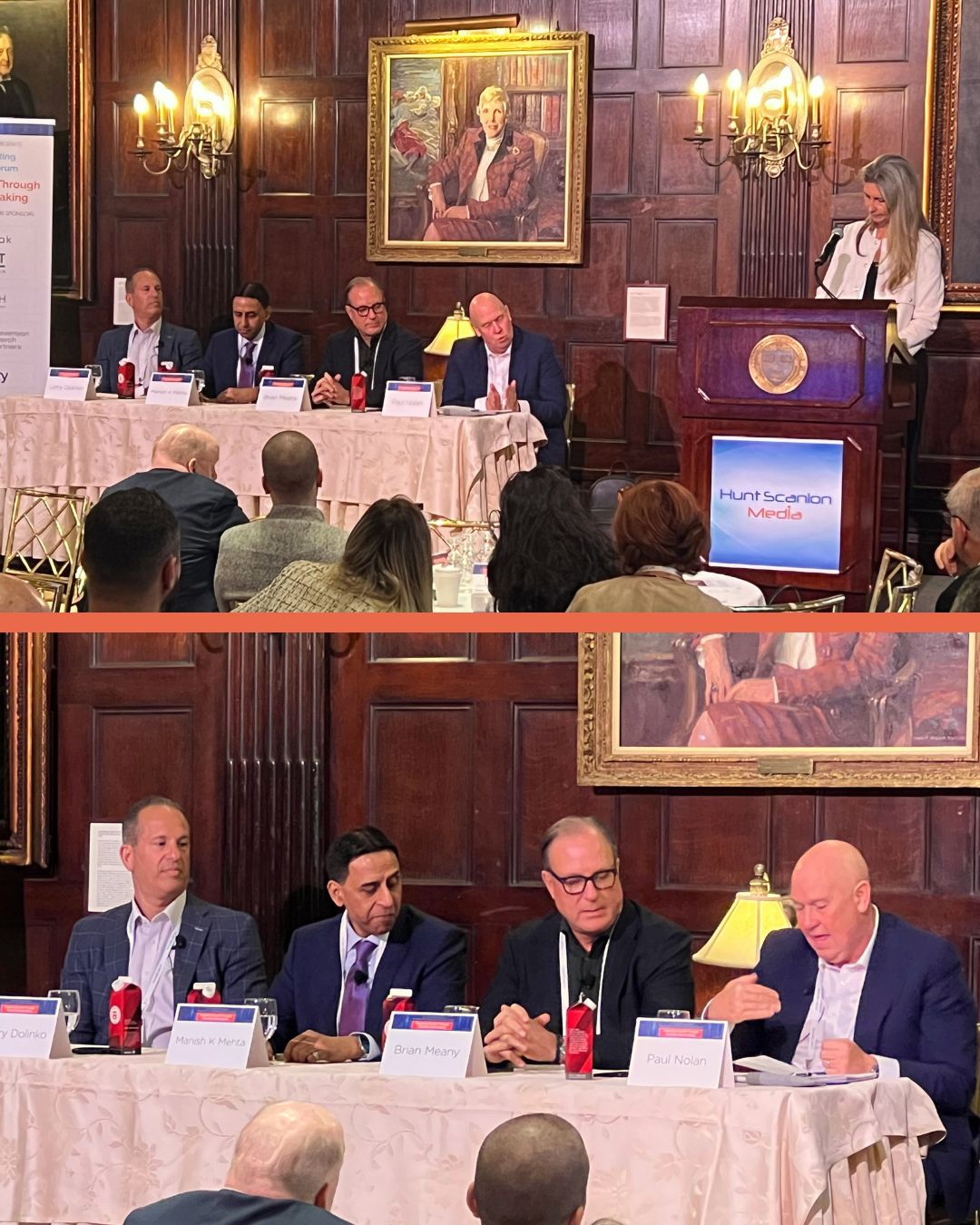
Larry Dolinko, Chief Executive Officer at Stevenson Search Partners, recently participated in Hunt Scanlon Ventures' Founder's Forum, joining industry leaders for a compelling discussion on the M&A surge reshaping the executive search and talent solutions sector. In addition to Larry, the panel brought together experienced voices from both sides of M&A transactions including Paul Nolan(Executive Chair at Excel Sports Management), Beth Rustin (Co-Head of Asset Management with Jamesbeck ZRG), and Manish K. Mehta (Chairman of Zemantics Ventures). The conversation was moderated by Nada Usina, co-founder and CEO of NU Advisory Partners.
As strategic acquirers and financial sponsors continue to actively pursue human capital businesses, founders and management teams are navigating critical decisions about partnership, growth, and value creation. Here are Larry's key takeaways from the discussion.
Why Human Capital Businesses Are Attracting Investor Interest
Drawing from his experience on both sides of transactions - having been PE-owned in a previous role and now partnering with a family office investor at Stevenson - Larry explained that while human capital businesses have always attracted investors due to strong fundamentals like low capital expenditure and robust cash flow, the current surge reflects a deeper shift. Private equity firms are recognizing that human capital is the greatest driver of portfolio company value, acquiring search firms not just for profit but to ensure a proprietary pipeline of leadership talent for their portfolio companies.
Throughout the discussion, the panelists emphasized that investors are increasingly focused on strong margins, lean operating models, and strategic investment in AI, data analytics, and tech-enabled delivery capabilities.
Larry shared Stevenson's own journey as an example of this evolution. By partnering with family office investor SixSibs Capital, Stevenson scaled rapidly while building out on-demand talent solutions alongside core executive search, evolving into a total talent solution provider. This represents where the industry is heading, and M&A offers the fastest path to acquire these capabilities.
The Critical Factor Most Buyers Miss
Perhaps most important, Larry emphasized a point that often gets overlooked in M&A conversations: "We are in a people business. We are only as good as our people and our culture. If you fracture the talent or the culture with a clumsy integration, you might destroy the value you paid for."
This theme resonated throughout the discussion, with panelists reinforcing that culture and leadership quality have become major signals when evaluating deals. The consensus was clear: if you have the right leaders and protect the culture, the numbers will follow.
Understanding Your Partnership Options
Throughout the panel, Larry also outlined key differences between strategic acquirers and financial sponsors that founders should understand:
· Financial sponsors typically operate with a three-to-five-year exit strategy, bringing strong operational discipline and KPI-driven structure. They move quickly with aggressive investment and clear metrics but are inherently constrained by the exit clock. While this model drives rapid scaling, Larry cautioned that people and culture can sometimes become secondary to efficiency and margin pressures.
· Strategic acquirers offer a longer-term view without a mandatory playbook. They focus on synergies and capabilities that integrate into their existing structure, providing stability and flexibility during challenging market conditions. Larry noted that this patient capital approach was crucial for Stevenson, especially during periods of unexpected headwinds, as strategic buyers prioritize long-term market building over rigid, short-term exit mandates.
· How to choose: Larry stressed that the right partner should be evaluated on two critical factors: Who can get you further, faster? Who is actually aligned with your culture?
The panel collectively reinforced the importance of alignment over deal size. As one panelist noted during the discussion, founders should focus on finding the partner who fits their culture and supports their plan, rather than simply taking the biggest check. Misalignment on either growth trajectory or cultural values is where deals fall apart.
People First, Numbers Second
In human capital businesses, the numbers follow the people, not the other way around. As the industry continues to evolve and consolidate, Larry's expertise highlights how founders who understand both the financial and cultural elements of partnerships will be best positioned for long-term success.
For founders considering their next strategic move, the message is clear: prioritize partners who recognize that in this business, protecting talent and culture during transitions isn't just important, it's essential to preserving the value that made the acquisition attractive in the first place.


